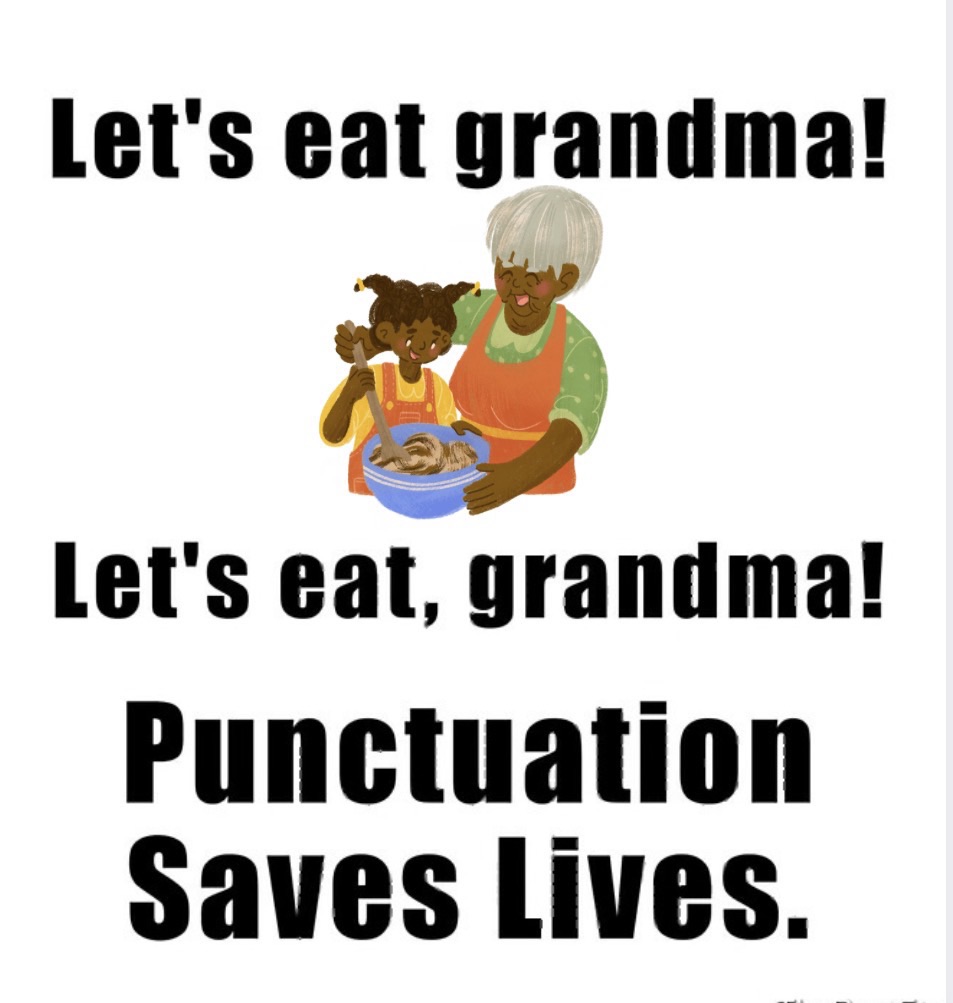
SUBSCRIBE to TheReedersBlock.com and follow for more writing tips with strategies to connect with other people. This article is 100% human-written.
It’s embarrassing to send misspelled texts, but comma splices are just as bad because they create confusion. They might be a bit worse for that reason. If you’re dating or interacting with someone who uses rules of punctuation, the pressure is probably overwhelming. You second-guess every message you type, and you can’t tell if they’re necessarily correct. Comma splices are distracting and kill the vibe. So, before you send that next text, here’s what a comma splice is and how to fix it.
Identifying and Fixing Comma Splices
A comma splice happens when two independent clauses are incorrectly connected using a comma. An “independent clause” can be thought of as a complete sentence. Below are some examples.
Incorrect: “I like you, I want to see you again.”
Correct: “I like you. I want to see you again.”
As you see, “I like you” is an independent clause and so is “I want to see you again.” Both clauses can form complete sentences on their own. So, when identifying a comma splice, ask yourself, can each part form its own complete sentence? In the above incorrect example, each part can. That makes it a comma splice. Let’s look at another example.
Incorrect: “I went over, I left early.“
Correct: “I went over. I left early.“
Again, in the above example, both parts can form complete sentences. Because of that, a comma is inappropriate here. Furthermore, there is more than one way to fix a comma splice. You can also fix a comma splice by adding a coordinating conjunction.
There are seven coordinating conjunctions: for, and, nor, but, or, yet and so (FANBOYS). Using a coordinating conjunction can also make your writing sound more relaxed or professional. There are examples below.
Incorrect: “I’m not available Thursday, I can go Friday.”
Correct (acceptable): “I’m not available. I can go Friday.”
Correct (best): “I’m not available Thursday, but I can go Friday.”
Although there are two correct ways shown above, “I’m not available Thursday, but I can go Friday.” is the better sentence. The word “but” softens the delivery. It feels warmer. On the other hand, “I’m not available. I can go Friday.” feels stern and halting. Some might interpret it as a reluctant concession. To send a more welcoming message, use a conjunction where appropriate. Let’s look at another example.
Correct but stiff: “I don’t like fish. I might like yours.”
Correct and smooth: “I don’t like fish, but I might like yours.”
The second example feels warm and inviting. The person acknowledges that they don’t like fish, but they might like the fish of the person they’re texting. This is how you send the right message.
The Takeaway
Comma splices disrupt the flow of your conversations, but they can be fixed. Use a period or a conjunction. Fixing these errors elevate your writing and social circles. Using AI can take too much time or come off as AI. You avoid people wondering if it was you or AI who wrote your last message. For more explanations with detailed examples, follow for the release of my upcoming book How to Write a Really Good Sentence. If you’re ready to improve your writing for your life right now, pick up my An Explanation of Quotation Marks, Commas, Comma Splices and Run-On Sentences here on Amazon. Until next time, write your way.
Jermaine Reed, MFA is an educator and the Editor-in-Chief of TheReedersBlock. Take time to Subscribe. It helps promote independent journalism and my site.
Discover more from The Reeders Block
Subscribe to get the latest posts sent to your email.
 The Reeders Block