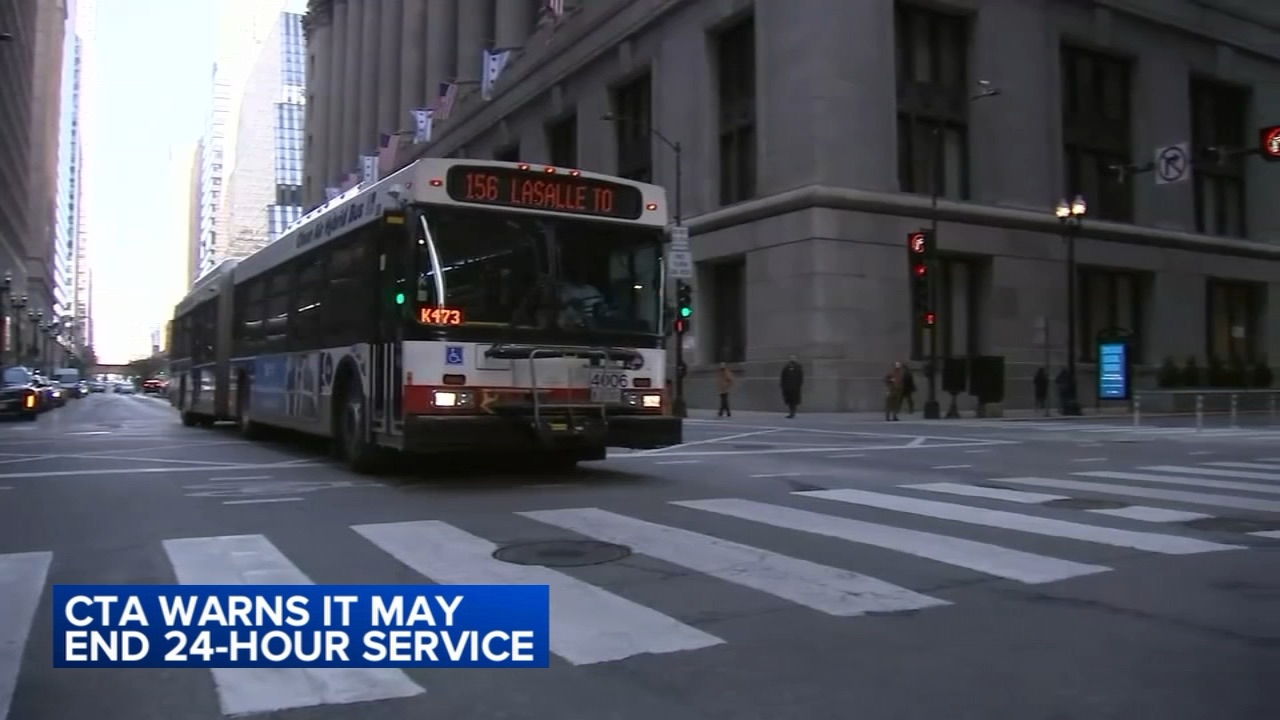
Photo from abc7Chicago.com.
SUBSCRIBE to TheReedersBlock.com and follow for more deep dives on complicated political topics. This article is 100% human-written.
“It shouldn’t take federal intervention for Illinois to take oversight of CTA seriously,” U.S. Transportation Secretary Sean P. Duffy said in a news release. Many Chicagoans share the same sentiment. Now, the Federal Government has opened an investigation into the IDOT because of violence on the CTA, and the $50-million funding to IDOT and the CTA might be cut. Some say this is a great response to the violence. Others say the real numbers tell a different story.
CTA Violence by the Numbers
This will be data-heavy, but bear with me. Overall, CTA officials say violent crime on the CTA was down 19 percent in the first two months of 2026 compared to 2025 in the same period. Additionally, one of the most serious issues with the CTA is robberies. According to the Chicago Police Department, compared to last year, violent crime like robbery is down 9 percent. The drop in crime didn’t stop with robbery.
Property crime had one of the biggest decreases of about 23 percent. Shootings on the CTA are down between 20 and 30 percent, depending on the source. In 2025, there were about 834 violent crimes reported on the CTA. This was a 6.4 percent decrease from the 891 reported in 2024. That noted, crime on the CTA is down overall, but that’s not the story being sold to Chicagoans by the Federal Government or the media. The reason is legit but exceedingly unsettling.
Why the CTA Feels More Dangerous
When a father has to shield his daughter from weed smoke on the Red Line train, he doesn’t feel safe. She doesn’t feel safe. When a woman is harassed by a group of teens on the bus stop, she feels afraid. What is data about lower crime rates when an everyday rider wonders if today will be the day they’ll be robbed on the bus? What they feel is a lack of security. They think if something happens to them, the offender will face no consequences. They’re not entirely wrong.
If someone assaults you, there is a less than 20 percent chance that person will be arrested. A crook has an 80 percent chance of walking away without charges. The CPD arrests less than one-in-five violent CTA offenders. And even though violent crime is down overall on the CTA, batteries rose by 24% between 2024 and 2025. That means, you’re not as likely to be robbed, but your chances of being physically hurt has risen nearly 25 percent. This is a problem. The governor of Illinois and a few lawmakers think they have found a solution, but it comes with great sacrifices from the CTA.
Combining the CTA, Metra and PACE to Cut Costs
On December 16, 2025, Governor J.B. Pritzker signed the NITA (Northern Illinois Transit Authority) Act into law, a move that will condense the CTA, Metra and Pace transportation systems into one by June 1, 2026. This comes after he made it clear the state wasn’t going to give the CTA a $1.5-billion bailout unless they agreed to “historic reforms.” Another champion of the law, State Representative Eva-Dina Delgado, argued the law could effectively eliminate $250 million wasted on “duplicate bureaucracies.” Beyond that, the law does some vital justice for riders.

Riders exiting the Metra will no longer have to watch their bus pull away just as their train stops. The NITA Act requires Metra and the CTA to sync schedules. In the past, they operated independently of each other, creating a unique frustration point for passengers. With this solved, riders can more effectively predict their commutes. This reduces their exposure to random violence. It also makes them feel safer. The next part does this on a grander level.
Imagine feeling as safe and comfortable on the Red Line as you do riding the Metra. Anyone who’s been a passenger on both knows there is a remarkable difference in atmosphere. The Metra generally smells ok and doesn’t have guys drinking vodka at 9 am. NITA seeks to make this a reality on the CTA as well.
There will no longer be three separate security plans. The CTA, Metra and PACE will form the Law Enforcement Task Force. Its primary focus will be addressing quality of life issues like drug use on trains that can escalate to confrontations between passengers. This is instrumental in creating a safer aura for riders. Either way, the Federal Government thinks cutting funding is the solution. It’s a double-edged sword with some pros.
The Funding Cut for Better Operations
The CTA is down about 136 million riders in 2026 compared to 2019. Even with less commuters post-Pandemic, the CTA has continued to operate at pre-Pandemic levels. This creates “ghost” buses or trains, where it’s an operator and a lone passenger. Stations are emptier, increasing the likelihood of crime. It sounds counterintuitive, but less funding could solve this issue.
Right now, the CTA is losing money on various parts of its system, and these can be cut to reduce costs. As an example, the Kostner Pink Line has dismal ridership. It has recorded as few as 150 passengers a day. To put that into perspective, the 79th Street Red Line sees over 2,700 riders on average a day. There is money to be saved. This would also increase safety.
Ghost trains and buses create opportunities for assaults and robberies. As the data shows, the CPD might not be well-equipped to solve those. Cutting trains or buses naturally creates a higher demand for other services. More traffic for other services equals less opportunity for covert crime. Something has to be done.
The Takeaway
The Federal Government has opened an investigation in the IDOT and is threatening to cut $50 million in IDOT and CTA funding due to the violence that seems to plague the CTA. Although crime on the CTA is down overall, batteries are up. Chicagoans feel less secure on buses, trains and platforms. And the CTA is down over 136 million passengers. It’s time for the organization to cut costs and trim services that are rarely used. Doing so would create more traffic for other services. This increases safety.
The CTA says crime is down, but the average rider tells a different story. It isn’t about the data. It’s about the lived reality of every passenger who’s ever gone to a job interview smelling like weed because they rode a train with smokers aboard.
Jermaine Reed, MFA is an educator and the Editor-in-Chief of TheReedersBlock. Take time to Subscribe. It helps promote independent journalism and my site. Follow him on TikTok, where he has over 9 million views and nearly 1 million likes. Help him get there.
Discover more from The Reeders Block
Subscribe to get the latest posts sent to your email.
 The Reeders Block