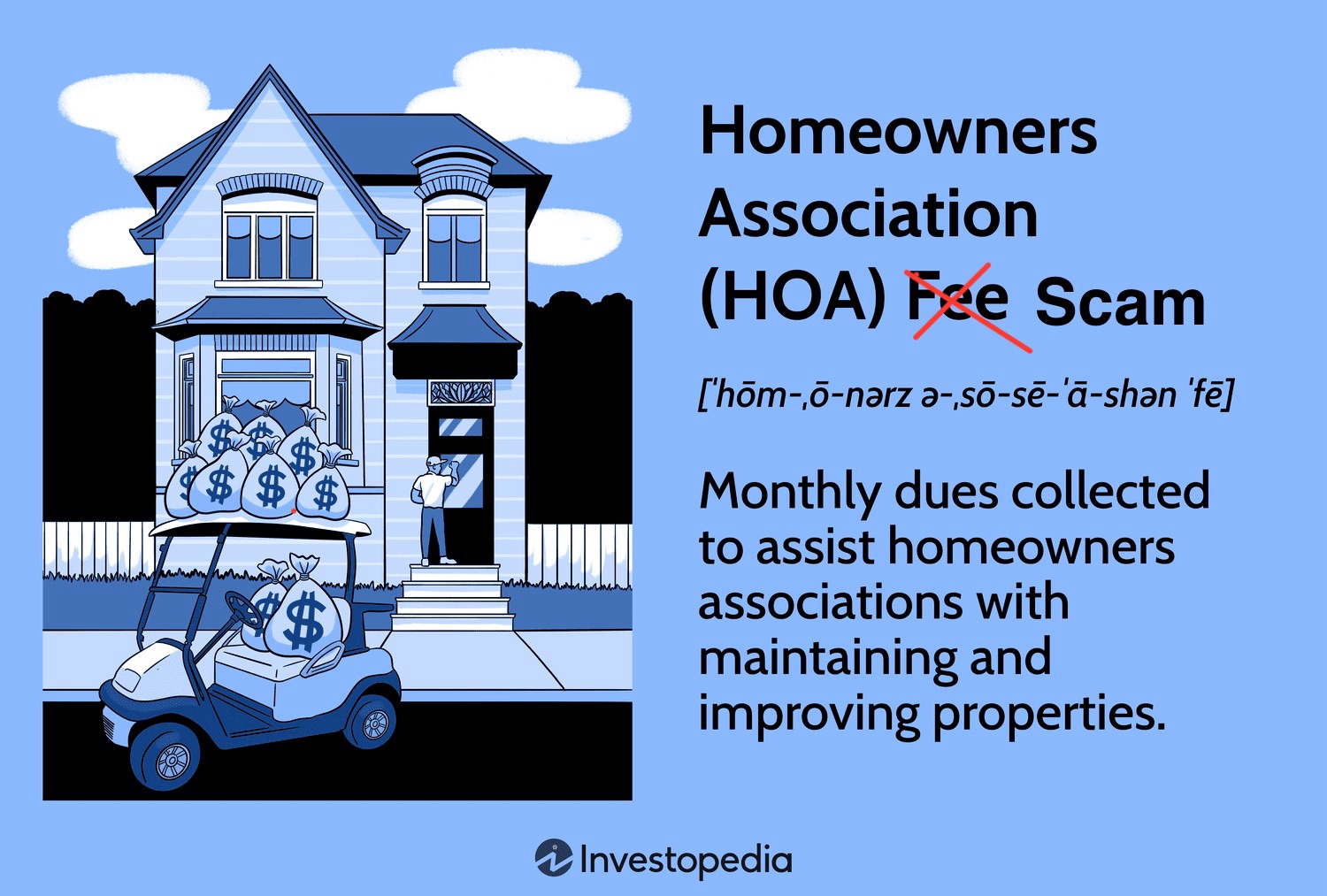
Recently, I was surfing Redfin.com in search of another house to buy and came across some enticing condos with relatively low prices. With the cost of homes as high as it is, I thought I’d hit the jackpot, but the excessive Homeowners Association fees smacked me back to reality. Americans are slaves to loans, and, thereby, banks, HOAs and the government. The American Dream, ripe with consumerism, now comes with excessive HOA fees. The real question is why HOA fees are on the rise and what this means not just for property owners but tenants as well.

Americans No Longer Own Property
In many countries, when you buy or build a home, it is yours without tax from the government, but that is not the case in America.
When you buy a hime with a mortgage, you have to pay the mortgage, interest and property taxes, along with any HOA fees, and you might have to pay mortgage insurance. NerdWallet.com confirms you could be paying mortgage insurance at 1.5 percent of the total home loan, and this could easily total over $5,000 a month.
The average American brings home less than $62,000 a year before taxes.
SoFi, a personal finance tech company, notes the average mortgage loan is set to be paid off in 30 years. So, for 30 years, a person could have to pay over $5,000 a month for their home. That’s roughly $60,000 a year. The average American brings home less than $62,000 a year before taxes. Ignoring the fact that with those numbers the average American will not ever be able to afford a home, paying $5,000 a month is no easy task to do for 30 years. Think of the various issues that arise in life. These could easily put someone on the brink of foreclosure. There are far too many stories of people losing their homes to foreclosure within a year or months of completely paying off their loan. This is disturbing on so many levels, but the rise in price of HOA fees may be even more disturbing.
Buy to Rent
When you buy a condo that comes with $1,000 or more in HOA fees, you are paying to rent. HOA fees are mandatory and failure to pay will lead to your property being taken. BankRate.com points out that if you don’t pay the HOA fees and late fees in full, your home can be sold off, and you will be removed from your property. This seems like a wild idea to me after paying for property.
This passing off of costs to tenants raises the price of rent.
Property boards argue they use HOA fees for maintenance upkeep, repairs and for community services or other amenities. Some condominiums come with perks like game rooms, theaters, laundry service and more. These things are nice, but you can also get these amenities in apartment complexes without the extra costs. The only way to make sense of buying a condo with a $1,000 HOA fee is to rent the condo for more than $1,000. Also, the renting of property comes with its own costs for inspection and licensing. These costs will be passed along to the tenant, at least partially. This passing off of costs to tenants raises the price of rent. It’s terrible for the economy and housing.
For the homeowner, for the rest of their lives and their dependents’, they’re tied into relatively high HOA fees, whether they have tenants there or not. The dependents inherit a bill. Any money the owner gets in rent is minus the HOA fees. They have no choice other than to put it off on a tenant or eat the expense.
Undoubtedly, there are some people who can afford and don’t mind paying excessive HOA fees, but when you see $1,000-or-more HOA fees on the southside of Chicago, it’s a warning about the housing market.
The American Dream
The American Dream we’ve been sold is not for keeps but only lease, and HOAs are looking to get in on the profit. Every bank, government agency or company in general is trying to find a way to squeeze as much cash from you as possible and keep you on a financial hook as long as they can.
[A homeowner’s] checks can be garnished by the state or federal government for missing student loan payments.
Let’s say a student goes to college, takes out student loans, graduates, gets a career, a car note and a house. In between then, they build a family. This person now has property taxes, car insurance, a mortgage and car note. This person is called a homeowner, but they own nothing. All of their possessions are tied to working forty years for an employer.
At any given time, if this person falls onto hard times, they can lose their home in foreclosure and their vehicle to repossession. Their checks can be garnished by the state or federal government for missing student loan payments. Because of this, this person is tied to their employer like a fetus to an umbilical cord.
… in some cases, [HOA fees equal] over $400,000 a month or over $4 million a year.
As written about in previous articles, Americans are expected to work for at least forty years, while their likelihood of getting Social Security is threatened with every changing presidential administration and the age of retirement is pushed up. This, too, is a part of earning the American dream, but the wise have already figured out this is not the way.
On the subject of HOA fees at over $1,000 a month, it makes no sense. After doing the math, in some cases, that equals over $400,000 a month or over $4 million a year. It’s a tax on every resident that comes out to be a substantial sum of money. Every resident loves amenities, security and living in a beautiful surrounding, but it doesn’t take $400,000 a month. At best, that’s excessive. At worst, it’s criminal. And who does this money really go to after expenses?
Corruption in HOAs
As JS Morlu notes, HOAs have been accused of embezzlement, fraud and other financial crimes. In particular, JS Morlu mentions a case where “over 40 individuals, including board members, attorneys, and contractors, who rigged HOA elections” were fined or sent to jail. After gaining control, these individuals started giving construction contracts to specific contractors for kickbacks. This scam robbed the HOA of over $58 million dollars. Some of the offenders got fined or went to jail. Still, it’s just one example of many demonstrating the widespread corruption in HOAs.
It’s important to fight back against corrupt HOAs to protect yourself, other homeowners and future generations…
HOA fees are on the rise, particularly on the south side of Chicago, and this is concerning considering this is where homebuyers come to avoid such fees. If it is happening here, it is starting to happen everywhere. Every alarm in the real estate industry should be sounding right now. This puts homeowners and tenants at the mercy of boards, lawyers and others in power who have no ethics or morals. Yet it is seemingly ignored by the government until a whistleblower comes forth with undeniable evidence.
Homeowners are in dire need of more legal protections against corrupt HOAs, as the Morgan Law Group writes. Many times, homeowners find themselves unable to prove their claims because of lack of evidence. That’s why the Morgan Law Group suggests documenting everything, asking for an external audit and seeking legal remedies. It’s important to fight back against corrupt HOAs to protect yourself, other homeowners and future generations who will become homeowners.
Unplugging from the System
Unplugging from the system means getting rid of that car note, avoiding mortgages and not taking student loans. These things happen, and when they do, the best thing you can do is plan a way out as soon as possible, by paying it off sooner, selling it or refinancing.
There are ways to avoid paying rent, mortgages or car notes.
You are in a rhythm right now. You pay your rent with your first check and your car note with your second. You split your student loan payments between checks. After each pay period, you have enough money to go out on Friday or shop for an item or two. Sometimes, you see something you want but can’t afford it, but that’s life. It doesn’t have to be.
Without a car note or mortgage, that money isn’t taken from your bank account. It remains there until you do something else with it. Not having a car note or mortgage might seem strange at first. It feels weird when you have a surplus of cash and your most important bills don’t exist. There are ways to avoid paying rent, mortgages or car notes.
Cash as an Asset
If you can, buy cars and property in cash. On websites like Redfin.com, Realtor.com and Auction.com, you can find ready-to-move-in condos with relatively low prices and reasonable HOA fees. You can find one for as low as $40,000, but obviously, the average person doesn’t have $40,000 in cash in a secret bank account. You can get there with the amount of time and money it would take to complete a car note.
Many people pay over $500 a month for their car notes, and this does not include insurance. If you saved about $278 every two weeks or $555 a month per paycheck for six years, you would have $40,000. Still, with the price of property increasing as is is, there’s no guarantee that $40,000 will get you close to what you wanted when you started saving years ago. But having $40,000 cash on hand isn’t bad.
If you want to grow the money you already have, you can do that easily trading stocks and options.
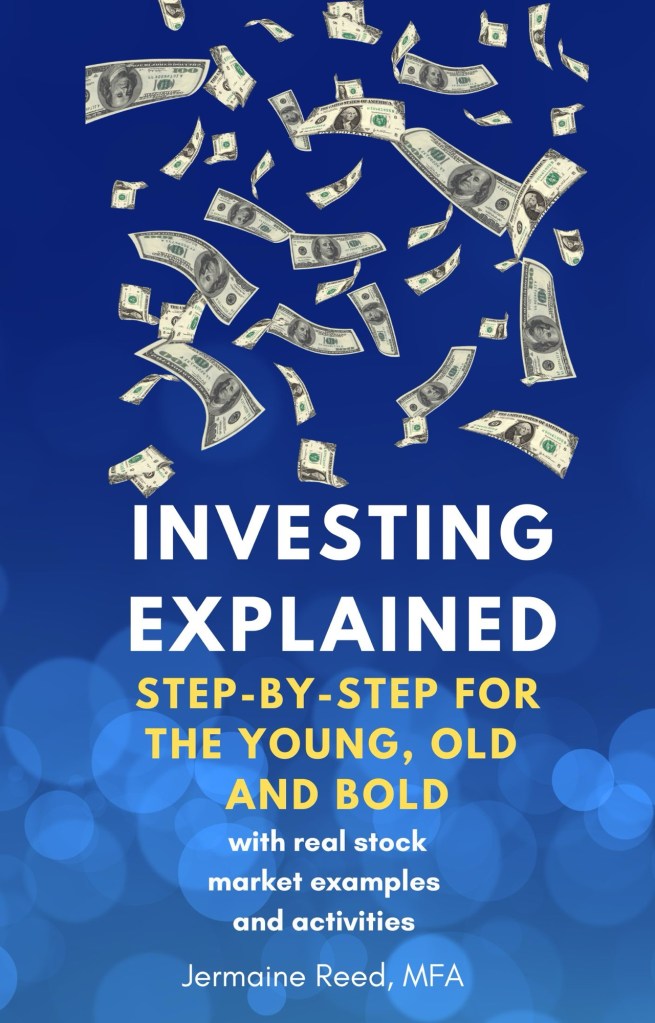
If you want to grow the money you already have, you can do that easily trading stocks and options. My new book Investing Explained Step-by-Step: For the Young, Old and Bold will be released soon. It covers how to trade in the stock market using real examples and engaging activities. You can read more about it here in my article Where is the Money?
The Takeaway
The American Dream is leased to Americans by the government, banks and organizational entities like HOAs, and this is all tied to Americans’ willingness to dedicate forty years of their lives to employers. When they buy a home, it comes with a mortgage, property taxes and sometimes outrageous HOA fees. Americans regularly take car loans and student loans, solidifying years-long debt that will siphon off any happiness with interest.
This is the beat, the rhythm, of typical American life. You punch a clock for forty years and pay a home loan for nearly just as long. You retire and hope to be able to keep the possessions you’ve been told you own, but that depends on Social Security and what president is in office. For forty years, you are a work slave. Then, at 67, after you have given everything you have, you’re allowed to retire but likely still have to pay off some of the debts you’ve incurred. That’s not a deal.
Focus on cutting your number of bills.
Buy your car in cash, save money and search sites like Redfin.com for ready-to-move-in properties with little or no HOA fees. If you can, pay off loans quicker to cut interest where you can. Focus on cutting your number of bills. Your biggest bills are usually rent, mortgage or car note. Getting rid of them might feel like a monumental task, but it’s doable. When you consider the alternative comes down to loans that last thirty years, saving for five or seven years to outright own a home and car, notwithstanding taxes and insurance, is the much better option.
If you want to learn how to grow the money you already have, look for my book Investing Explained Step-by-Step: For the Young, Old and Bold which will be dropping soon. Sign up for free for notifications about the release.
This article was written by Jermaine Reed, MFA, the Editor-in-Chief of The Reeders Block. Join the email list to get notifications on new blog posts and books. This article is 100% human-written. And remember, if you see an error, that’s what makes us human.
Discover more from The Reeders Block
Subscribe to get the latest posts sent to your email.
 The Reeders Block