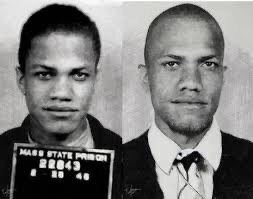
Photo of Malcolm X from TheGuardian.com.
“They wanna see me locked up and cage me. I come back bigger and stronger.” — 50 Cent, Psycho
Prison anywhere is a terrible place to be for most men who happen to end up there for whatever reasons. While too many men are broken behind prison walls, there are many great men who are made in prison or are sent to prison.
Malcolm X
From 1946 to 1952, Malcolm X served 6 years of prison time for burglary and larceny. At the time, he wasn’t even 21 yet, and by today’s standards, that’s hardly the age of a responsible adult. Today, criminal convictions and the word “criminal” are used to disenfranchise Black men. Donald Trump became president as a 34-count convicted felon, while Black men convicted of felonies can’t get jobs at Macy’s. For Malcolm X in his time, Black men with criminal convictions were not only demonized and ostracized but excluded.
Clearly, burglary and larceny are crimes to which there are no real defenses if a person commits those acts. It would not be odd for people to perceive that person as a criminal. The word “criminal” is defined by outsiders and worn only by the man who sees himself that way.
Incarcerated, Malcolm Little became Malcolm X, after studying the Islam faith and converting. This man who was now a convicted felon found what he deemed to be his purpose: Advancing the social rights of people who looked like him. He became a voice for the downtrodden, excluded and voiceless. He did not see himself as a criminal because he wasn’t.
Malcolm X went to prison for robbery and larceny, and while in jail he found himself. From there, he used his voice to bring attention to social injustices and effect change. There’s not a person who can stand next to his shadow and be greater.
Nelson Mandela
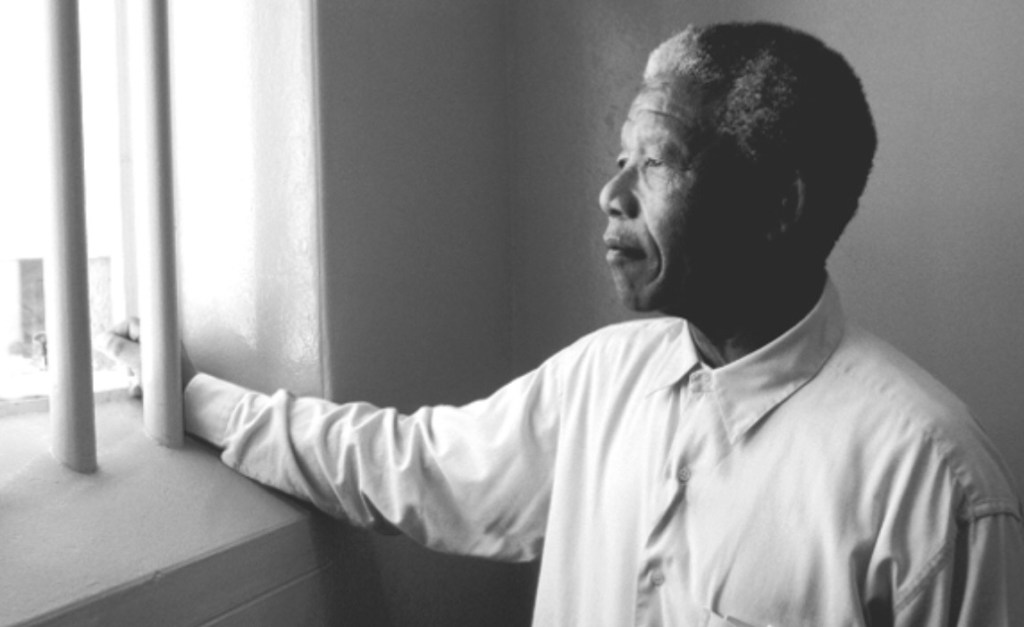
For 25 years, Nelson Mandela was held incarcerated in South Africa. The government called him a criminal, but his supporters called him a political prisoner. For those 25 years and many before, Mandela had been demonized as a criminal but loved by those who saw him as a promoter of freedom and peace.
After his release, Mandela became the president of South Africa. Going from 25 years in prison being treated as scum to the president of a nation had to be the most humbling experience of his life.
25 years is considered a lifetime, and Mandela did it with a mindset strong enough for him to become president of the same nation that took those years from him. Men of less fortitude would have broken under similar circumstances For Mandela to become president, after being in jail for 25 years and being treated like nothing, he had to convince himself he could do it. He did so in an extraordinary fashion.
Huey P. Newton
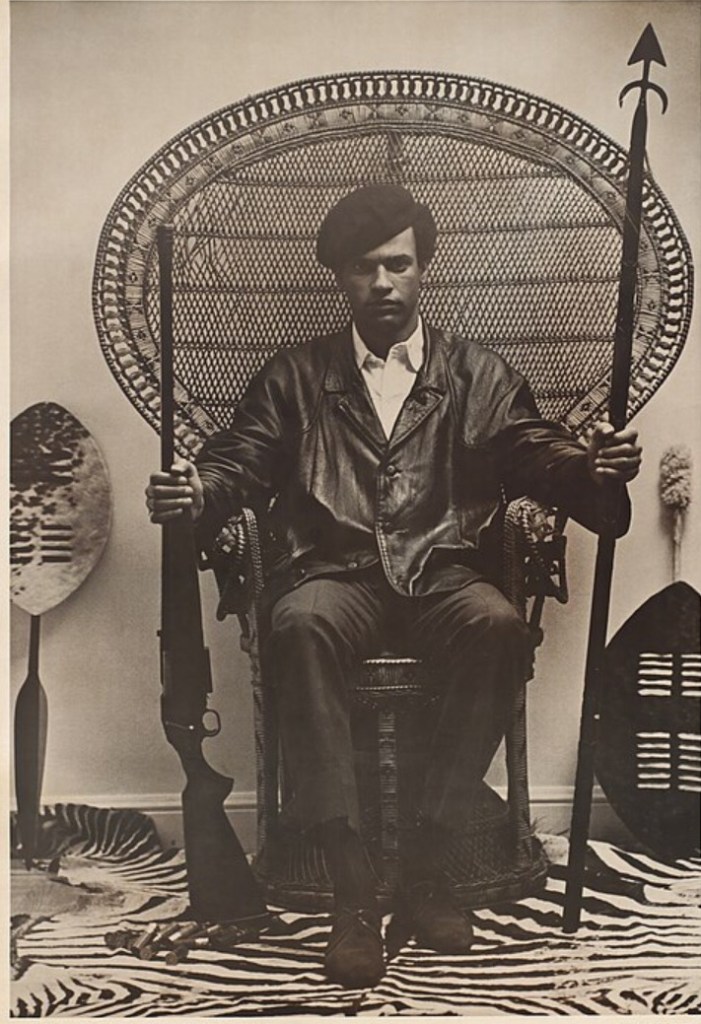
Before starting the Black Panthers with Bobby Seale in 1966, Huey P. Newton had been arrested for assault, after allegedly stabbing a man with a knife. Two years after starting the Black Panthers, Newton was convicted of second-degree murder in connection with the death of a police officer. He served 22 months in prison, but the conviction was later overturned.
During much of his time in prison, Newton was facing life in prison. Having such a heavy sentence hanging over his head must have stressed him beyond understanding. Yet he planned as if the moment was temporary. From his cell, he designed a movement that would forever become a part of American history. Most importantly, it would continue to shape and inspire resistance to racial oppression.
Although law enforcement unlawfully ambushed and killed Huey P. Newton, his legacy lives on in the very fabric of America. His name is mentioned everywhere from college classrooms to board rooms to nations across the world he has not ever set foot in. It can be argued prison only made him better.
Ross Ulbricht: The Trafficker

In 2013, Ross Ulbricht was taken into FBI custody and later sentenced to life plus 40 years for his role in creating a drug trafficking website called Silk Road. Things began to fall apart when law enforcement linked 6 overdoses to drugs bought on his website. Between starting the site and being arrested, he paid a hitman to kill 6 people. The hitman collected the money but didn’t actually kill anyone. But Ulbricht intended murder. His story has a happy ending — if you are not against freeing a convicted drug trafficker and intended murderer. In January 2025, Donald Trump granted Ulbricht a full, unconditional pardon, easing those pesky charges reflective of who he is.
By no means is Ulbricht a great man, but he is formidable. He sat incarcerated for over 12 years, thinking he would not ever come home. He’s back, and he’s looking to start a cryptocurrency. His current net worth is about $1.2 million, and with talent like his and the powerful connections he has, it will only keep growing.
The Stronger Man Unchained
Pointing to the first three men mentioned as examples, prison — that is the law — pulls men who aren’t brainwashed or fearful of the law. These men have rebel spirits within, and sometimes, they start off in criminality like Malcolm X. Other times, they are peaceful men seeking freedom for their people but are persecuted. These men are all leaders with powerful voices. When they speak, others don’t just listen. They do. They take action.
In the Malcolm X movie, there is a scene where he seems to command a whole crowd with a few movements of his hand. The police are shocked. One of them whispers, “No one man should have all that power.”
There are tales of prison and what happens there, but the most important aspect is what the individual prisoner does while there and immediately afterwards. Malcolm X, Nelson Mandela and Huey P. Newton had plans for their exit from incarceration. They maintained and built networks of people to change the course of their current timelines. This is what great men do.
The Takeaway
Prison is not a great place, but great men enter and leave every day. Those like Malcolm X may have been convicted and called criminals in their lives, but they did not see themselves that way. The people they surrounded themselves with revered and respected them. Today, we have a president of the United States, who is also a convicted felon of 34 counts. He’s a convicted fraudster, but he didn’t go to prison. Nonetheless, labels are only words, and prisons might be doing more good for some than society knows.
This article was written by Jermaine Reed, MFA, the Editor-in-Chief of The Reeders Block. Join the email list to get notifications on new blog posts and books. This article is 100% human-written. And remember, if you see an error, that’s what makes us human.
Discover more from The Reeders Block
Subscribe to get the latest posts sent to your email.
 The Reeders Block