Photo from EvalCommunity.com.
If you are looking for a new job or one in addition to the one you already have, you’re not alone. The unemployment rate is slowly ticking up. For some groups, it’s happening even quicker. If you’ve filled out job applications but have gotten no response, try these 3 pro tips to create a résumé that gets you a job interview.
Proofread Your Résumé
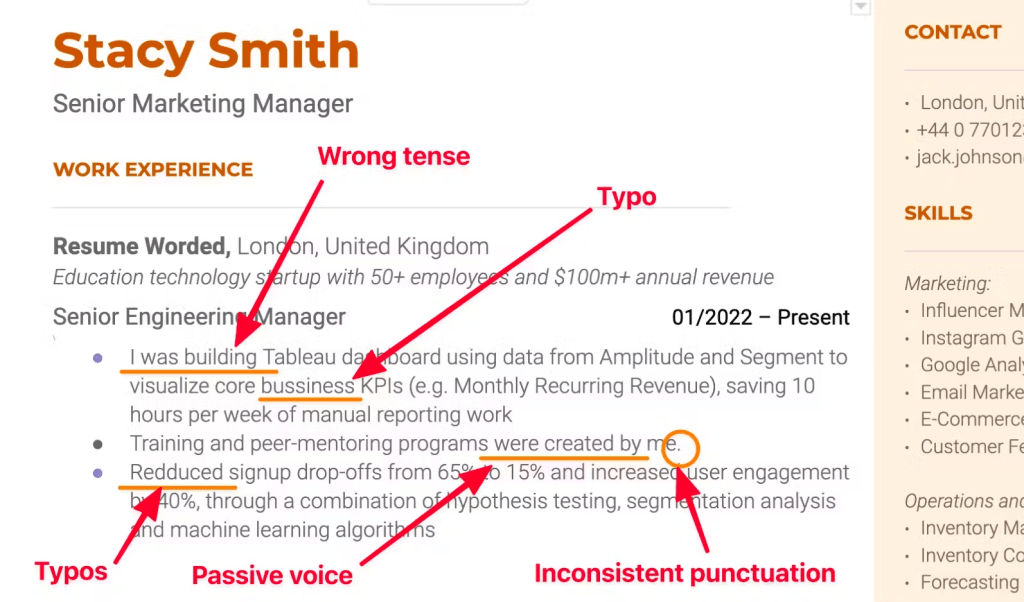
Stacy from the picture is going to have a pretty tough job landing a job interview. She should have proofread her résumé. It’s essential you proofread your résumé and cover letter before submitting them. Submitting error-free documents boosts your chances of getting an interview. It shows the employer you pay attention to detail. Even though you probably think you’ve caught all the errors in your documents, double checking doesn’t hurt.
Oftentimes, job seekers don’t see an error on their résumé until after they’ve sent it to half a dozen employers. They fix that error but fail to find and fix the other errors. Go through your résumé and cover letter with a fine-toothed comb. Check for typos, incorrect tense, punctuation errors and other mistakes. ResumeWorded.com gives excellent advice on checking for these kinds of errors.
Also, run your résumé through ChaptGPT or DeepSeek to check for misspellings, grammar mistakes and other errors. These Ai tools can find the mistakes you didn’t. Use these tools as assistants and not to build your résumé for you. Here’s why.
Make Your Own Résumé
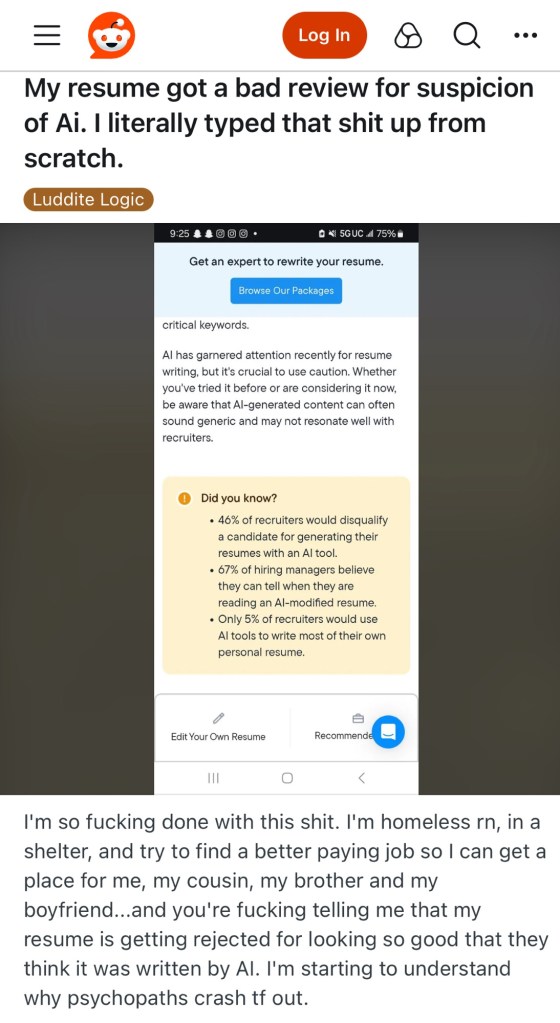
Employers are increasingly using Ai tools to identify and disqualify Ai-written résumés. They may, in some cases, get it wrong, as Reddit user August_Rodin claims. Either way, it’s best to write your own résumé and cover letter or find a human who can. There are a ton of Ai-written résumés flooding the inboxes of employers. These résumés, while grammatically correct overall, lack any personality.
When you create your own résumé and cover letter, you add the human element. Your language will not be as stiff and repetitive as Ai tends to be. How you describe your past jobs will feel more authentic.
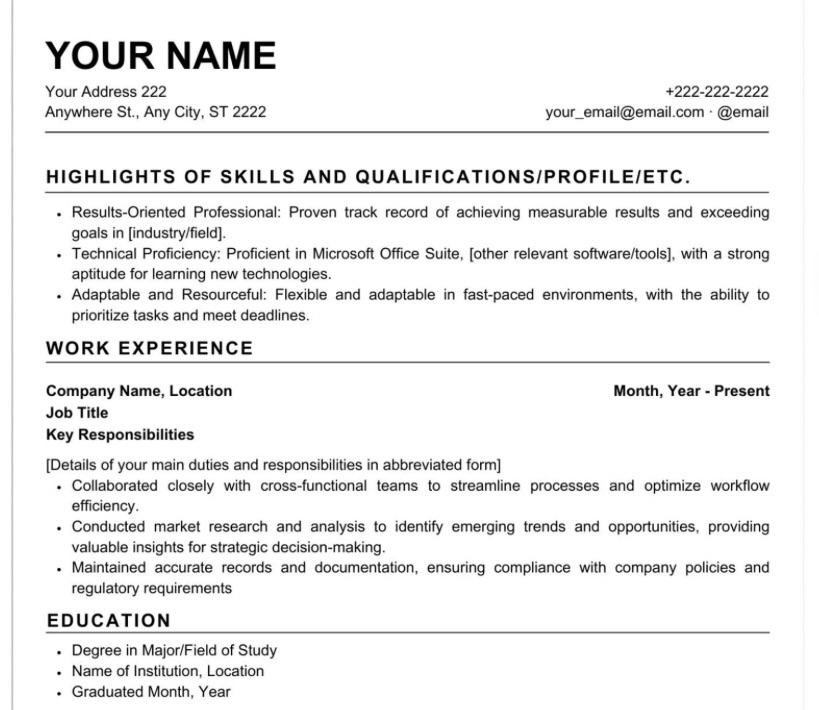
Below is a photo of a simple résumé. Below “Professional Experience”, you would put your education section and maybe a section for your skills. Under your job descriptions, you would list 4 — 6 descriptions. It’s an easy format to follow for you and to read for the employer.
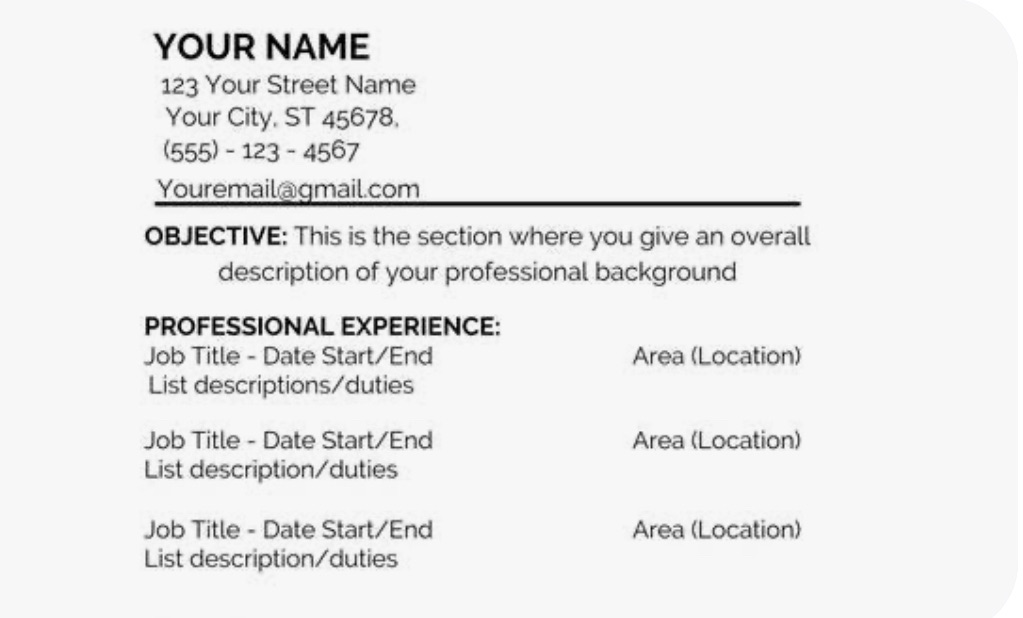
You don’t have to be a résumé expert. Just use Microsoft Word, Canva or another word processor. Microsoft Word and Canva have dozens of templates to pick from. You want to select a simple one that is easy to read and distraction-free such as the one above. Below, you’ll find a useful example of a strong résumé.
How Much? How Many? How Long?
Attach numbers to your past job descriptions. Employers are interested in not just what you did but how effectively you did it. They want to know the results of the work you did.
As an example, if you managed employees for four years, you should write: • Effectively managed a team of 40 employees for 4 years. In that sentence, you quantify the number of people you managed and for how long. If you upsold makeup as a cashier, you should write: • Upsold over $50,000 of beauty products at point of sale. This sentence gives an employer confidence you’ll be a financial asset. Check out the below photo from ResumeWorded.com to see an example of a résumé with quantifiable results.
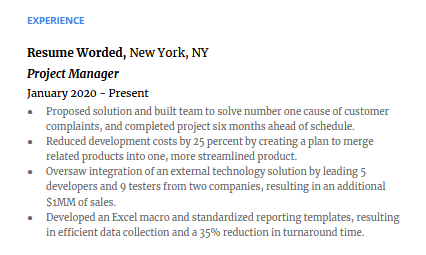
As you see in the above photo, numbers are mentioned. It mentions reducing “development costs by 25 percent” and overseeing a solution involving “leading 5 developers and 9 testers” resulting in an “additional $1MM of sales.” These numbers stand out as impressive results.
With this information, go back to your résumé, and check for numbers. Have you provided enough “How much? How many? How long?”An employer should be able to gather at least some data from your résumé, and this is reflected by what you accomplished in your positions. You shouldn’t overload your résumé with numbers. You should provide quantifiers though.
The Takeaway
Many people are looking for work or extra work to make ends meet. Employers are flooded with hundreds of poorly-written résumés or résumés written by Ai. Be different. Go back and proofread your résumé and all documents before submitting them to an employer. Make your own résumé. Use Microsoft Word or Canva for great templates. Also, add quantify to your résumé. Employers want to know how much, how many and how long. With that, you’ll be any employer’s prime candidate.
This article was written by Jermaine Reed, MFA, the Editor-in-Chief of The Reeders Block. Join the email list to get notifications on new blog posts and books. This article is 100% human-written. And remember, if you see an error, that’s what makes us human.
Discover more from The Reeders Block
Subscribe to get the latest posts sent to your email.
 The Reeders Block
One thought on “3 Pro Tips to Create a Résumé that Gets You a Job Interview”