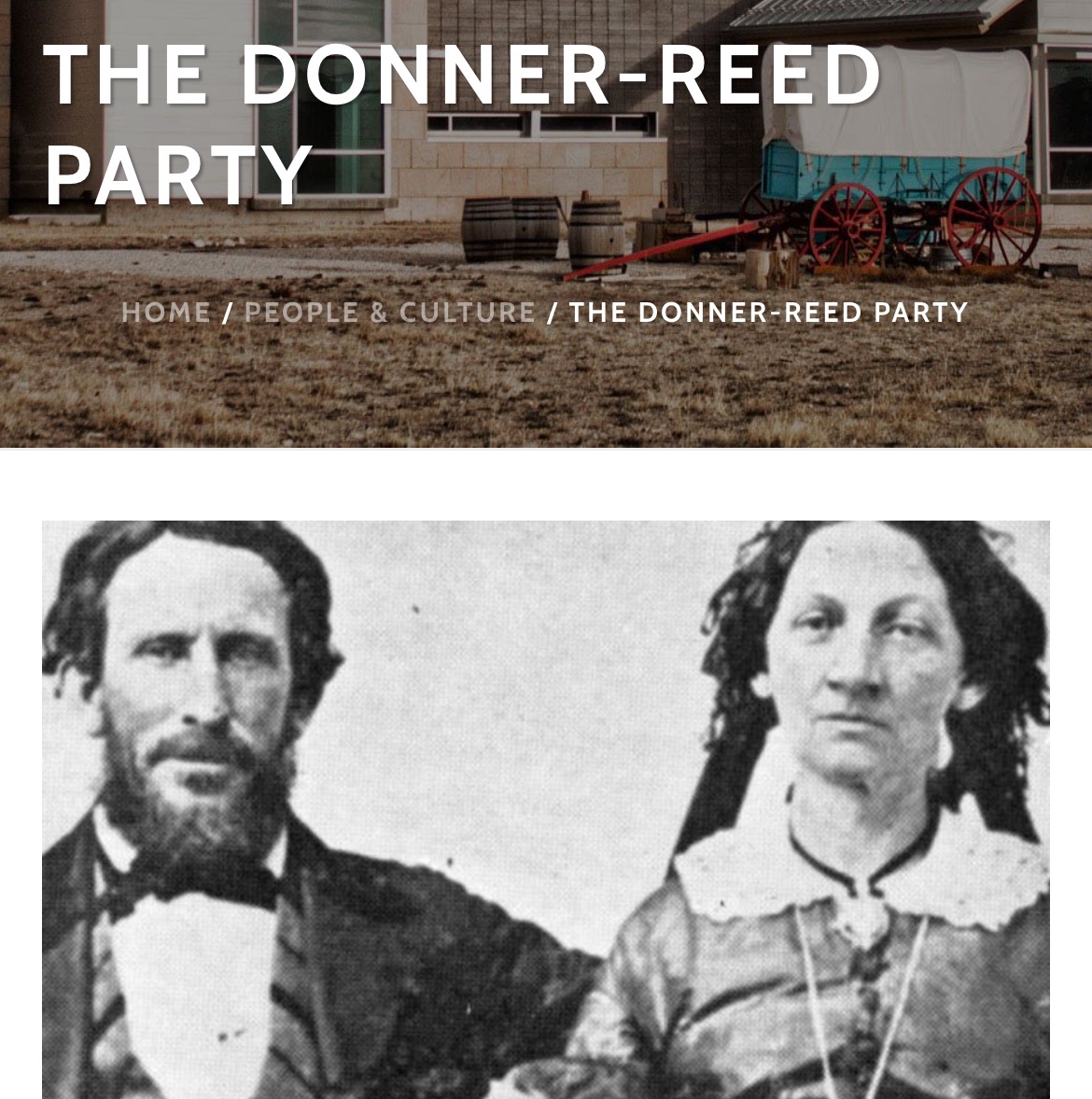
George Donner wasn’t a reckless man; he was a successful, well-regarded farmer from Illinois, the kind of patriarchal figure people trusted. That’s why, in the spring of 1846, dozens of families elected the 62-year-old as their captain for the trek west to California. His journey began with optimism, wealth, and three fully stocked wagons—a true pioneer setting out for the promise of Manifest Destiny.
The disaster that now bears his name wasn’t a sudden calamity; it was a slow, deliberate sequence of misjudgments and bad timing. This is a true Halloween horror story.
The critical mistake, the one that sealed their fate, was made at Fort Bridger. Here, Captain Donner and his group were presented with the lure of the Hastings Cutoff, a supposed time-saver championed by a charismatic promoter. Despite warnings that the route was untested and treacherous, Donner was convinced. He led his company off the established trail, betting that a 300-mile reduction was worth the risk.
This gamble immediately began to consume his reserve of time and supplies. The Cutoff was no road; it was a grueling obstacle course. The party spent precious weeks—the time they desperately needed to cross the mountains before the snow—hacking a path through the Wasatch Mountains. Then came the brutal Great Salt Lake Desert, where the group lost vital oxen and suffered devastating delays. By the time the Donner Party struggled back onto the known California Trail, they were nearly a month behind schedule. This lag, engineered by Donner’s decision, became the countdown timer to their demise.
The party, now frayed and running on fumes, staggered into what is now Nevada, but the bad luck was just starting to get personal. George Donner’s own wagon suffered a broken axle. As captain, his place should have been at the head of the column, driving the group forward. Instead, the Donners were forced to stop and attempt repairs, splitting the group and isolating the leader at the worst possible time.
By the time the vanguard of the party finally reached the foot of the Sierra Nevada near Truckee Lake, the calendar had turned to late October. An early, catastrophic blizzard slammed into the mountains. The Pass was choked with snow, locking the main party into a cluster of desperate cabins.
The Winter of Entrapment: Survival and Desperation at Truckee Lake
When the early snows sealed off the Sierra Nevada in late October 1846, the Donner Party was fundamentally split: a larger group of families settled into crude log cabins near Truckee Lake (now Donner Lake), and the families of the Donners and their hired hands were trapped eight miles back at Alder Creek. Both groups faced the same bleak calculus.
November – December: The Illusion of Order
In the early weeks, a sense of pioneer resourcefulness and false hope kept them going. They slaughtered the remaining oxen, curing the meat and stacking it. The cabins at the Lake—built hastily by the first emigrants—offered some protection, but they were barely enough for the 60 people crammed inside.
Food quickly became scarce. By early December, the meat ran out. The diet devolved to scraping by on ox hides, which were boiled repeatedly to make a greasy, gelatinous “soup,” providing almost no true nourishment. They boiled bone fragments until they crumbled, trying to extract any speck of marrow. The psychological toll from the elements was just as bad, if not worse.
The cold was relentless, compounded by the constant hunger. George Donner, at the separate Alder Creek camp, was already suffering from his injured hand, a wound that was now becoming a crippling infection. The absence of a strong, unified leader—as George was incapacitated—compounded their misery.
By mid-December, realizing that simply waiting meant certain death for everyone, a desperate plan was hatched at the Lake Camp. A group of fifteen people—ten men and five women—fashioned rudimentary snowshoes from ox-bows and leather. They carried minimal rations, a hatchet, a gun, and one objective: to walk 100 miles over the mountains to get help. This group, the “Forlorn Hope,” was a terrifying all-or-nothing gamble.
After several weeks in the blizzard-lashed wilderness, lost, starving, and frozen, the Forlorn Hope party began to die. It was in this detached, starving group, far from the morality of the camps, that the ultimate taboo was broken. The survivors, faced with the agonizing choice between consumption of the deceased or immediate death by starvation, made the necessary, dreadful choice. Only seven of the original fifteen—all five women and two men—finally stumbled out of the mountains and reached the valley settlements, carrying the horrific secret of their survival.
January – February: The Nadir
Back at the two main camps, the situation collapsed entirely. The children and the weakest adults died from starvation, disease, and the extreme cold.
At Truckee Lake, the Breen family patriarch began a meticulous, heart-wrenching daily diary, recording the deaths, the relentless snow, and the grim weather. By the end of January, the camp was a frozen charnel house.
At Alder Creek, the Donners, isolated and with George gravely ill, were suffering worse. Children were dying, and desperation mounted with no hope of immediate rescue.
When the first relief party, organized after the Forlorn Hope survivors raised the alarm, finally reached the Lake Camp in late February, they were met with a scene of utter devastation: emaciated survivors living among the bodies of the dead, some of which had been cannibalized. The rescuers immediately began evacuating the weakest, prioritizing the children.
March through April represented the final deadly weeks. The multiple relief efforts that followed were heroic but tragically insufficient. Blizzards caught the rescuers and the surviving emigrants midway, leading to the creation of a temporary site known as the “Starved Camp,” where more people died and the same terrible choices had to be repeated.
The final, and most wrenching, tragedy involved George and Tamsen Donner. By the time the third and fourth relief teams arrived in late March, George was too sick and weak to be moved. Tamsen, a woman of deep resolve who was determined to open a school in California, made the choice to stay behind with her dying husband, sending her young daughters ahead with the rescuers.
George died, alone with Tamsen, around March 27th.
When the very last relief party reached Alder Creek, they found his remains. Tamsen had attempted to hike out on her own after his passing but ultimately succumbed to the elements and exhaustion near the main Lake cabins.
The Donner Party was not a story of malicious intent; it was a brutal, extended case study in human failure against overwhelming environmental odds, where the boundaries of morality were pushed past the point of recognition for the simple sake of survival. Of the 87 people who became trapped, only 45 survived.
Discover more from The Reeders Block
Subscribe to get the latest posts sent to your email.
 The Reeders Block